A week is a lifetime in a soft launch
They say a week is a long time in politics, but it’s a lifetime in a soft product launch. Since hitting that initial wall of zero sign-ups, I didn't wait around for the metrics to magically change. I just kept building. In the last seven days, I have:
- Built a native blog directly into the app to start driving organic marketing.
- Vastly improved the SEO and backend analytics so I actually know what's happening under the hood.
- Fixed countless bugs and UI quirks—which is actually a blessing in disguise, because the original experience absolutely would have put anyone off had they actually managed to log in.
- Ironed out critical sign-up friction that was probably costing me the few users who did try.
- Scrapped the (so far very pointless) waitlist.
Stepping out of the 'Manager' shadow
I’ve spent my entire career as a Project Manager. I live in the world of timelines, stakeholders, and mitigating risk while 'managing' the output of others. But lately, I’ve had a nagging itch to do more than just oversee the work. I wanted to own the work.
I didn't just want to learn syntax or write code. I wanted to see if I could adapt my project manager skill set to handle the full gauntlet of building a product:
- The Engineering: Translating a messy vision into a functional tool without a dev team.
- The Marketing: Realizing I had absolutely zero distribution strategy. I spent a month building the app and completely forgot to figure out where to actually put it. I tried setting up an Indie Hackers profile, got lost in the onboarding, and just gave up. My only real network was LinkedIn (where I rarely even post). This entire landscape is completely new to me—hence learning the hard way how not to pitch on Reddit.
- The Identity: Stepping outside my safe, comfortable 'Project Manager' label and actually hitting 'Publish.'
When I finally updated my LinkedIn banner to reflect this new chapter, it wasn't just a profile change; it was a profound psychological relief. The zero sign-ups didn't matter -but pushing myself out of my comfort zone did.
The problem: Most tools profit from your anxiety
As a Project Manager, I’ve tried every task manager on the planet. Through years of testing, I realized most of them inadvertently cause 'productivity paralysis.' They give you a beautiful place to store 100 unfinished tasks, which eventually morphs into a digital graveyard that just stares back at you, judging you.
We spend hours organizing work instead of actually doing it. I wanted to build a 'sanctuary'—an anti-anxiety tool that forces you to focus. I call it kado (and honestly, I’m still entirely unsure how to pronounce it. Kay-doh? Kah-doh? A classic founder faux pas? Absolutely. But we're rolling with it).
The philosophy: An "opinionated" workflow built with AI
I am not a traditional developer. To build kado, I treated AI as my engineering team. Instead of managing people, I was managing prompts, debugging logic, and aggressively iterating. I built kado around a few strict, opinionated rules that I couldn't find in any other software:
- 🧠 Smart Capture: Stop manually typing and categorizing tasks. You can paste a messy email thread, rambling meeting notes, or a brain dump into the app. The AI extracts the actual action steps and due dates in seconds.
- 🤖 The Active Assistant: Unlike a static list, kado moves with you. Tasks scheduled for 'tomorrow' automatically shift into focus when you wake up today. If a task sits untouched for 14 days, the Assistant quietly archives it. If it was truly important, you would have done it. If not, it’s gone—zero guilt, zero clutter.
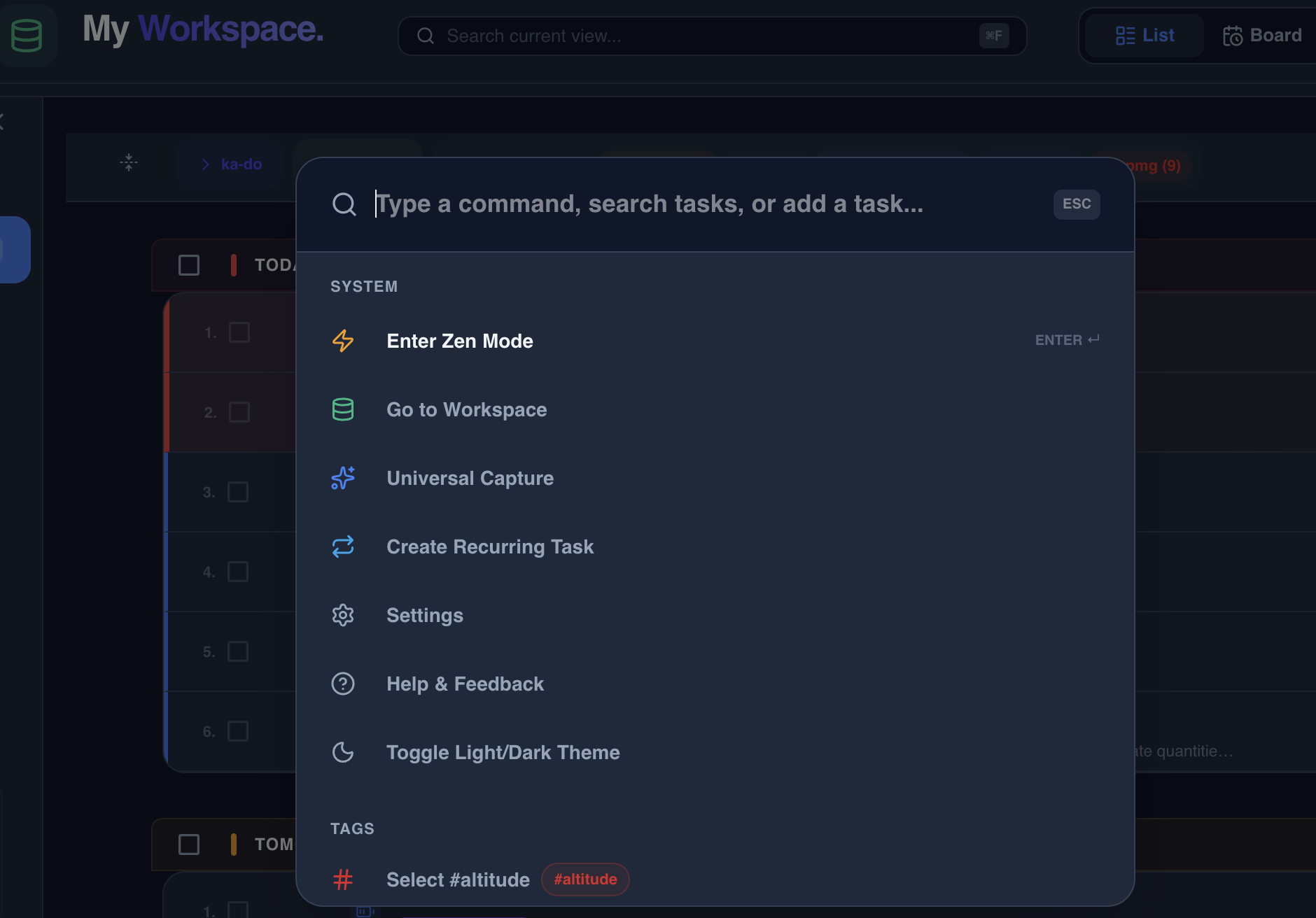
- 🎯 Radical Focus: You can only pin three high priority tasks for the day. If you try to add a fourth, it gets bumped to a waiting list. A built-in 'Zen Mode' blurs everything else out so you have to tackle your work one item at a time.
- ⚡ Instant Load: I had the AI help me build this using a 'local-first' architecture. Your data saves directly to your device, meaning it opens instantly with zero loading spinners.
What’s next?
I built this to cure my own task-list paralysis, and honestly, it works. But now I need to know if it actually helps anyone else, or if I'm just crazy.
The beta is completely open right now. I scrapped the pointless waitlist (not that anyone was on it anyway).
If you struggle with to-do list overwhelm, give it a spin. I want your most brutal, unvarnished feedback: What clicks? What’s infuriating? Is dumping a rambling email into Smart Capture actually useful, or are you just going to spam the Cmd-K shortcut to quick-add your tasks?